Growing Fruit Trees in Pots: A UK Patio Guide
October 10, 2026 - Gardening Tips

October 10, 2026 - Gardening Tips
October 07, 2026 - Varieties
A fruit tree is one of the most rewarding things you can plant, and one of the easiest to get wrong. Every spring the garden centres fill with healthy-looking young trees, and a good few of them end up too large for the spot they were given, carrying a single lonely apple, or refusing to crop at all because the variety planted nearby flowers a fortnight too late. None of that is hard to avoid. A little thought about space, rootstock, pollination and soil before you spend any money will give you a tree you are still picking from in twenty years.
Be honest about the dimensions you have. An apple on a vigorous rootstock can spread five metres or more; on a dwarfing one it may stay under two. Picture the mature canopy, not the sapling in the pot, and look up as well as sideways. Overhead cables, a neighbour's window and the shadow your tree will cast across the vegetable patch at midday all matter.
Check the essentials before choosing anything:
Small gardens are not shut out of fruit growing. A trained form does the work of a full tree in a fraction of the footprint: espaliers and fans spread flat against a wall or fence, cordons take roughly 60 to 90 centimetres of width and can line a path as a mini orchard, and stepovers make a low fruiting hedge. They need summer clipping to hold their shape, but in a courtyard they are often the difference between growing fruit and admiring other people's.
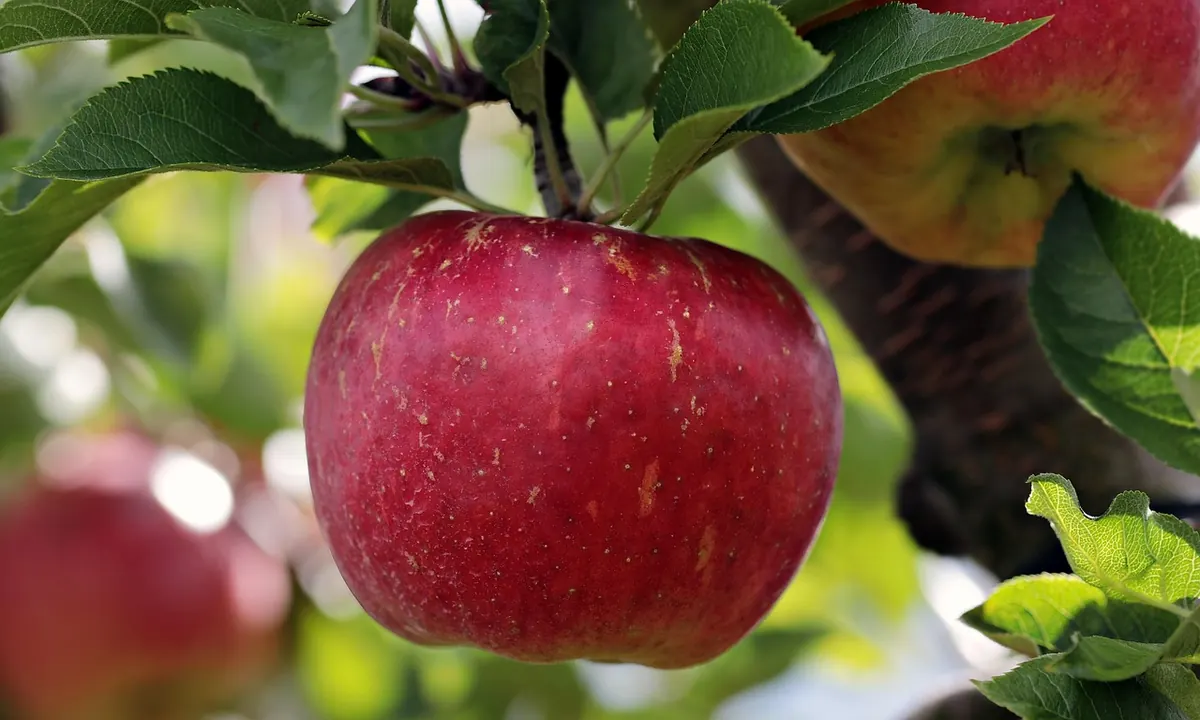
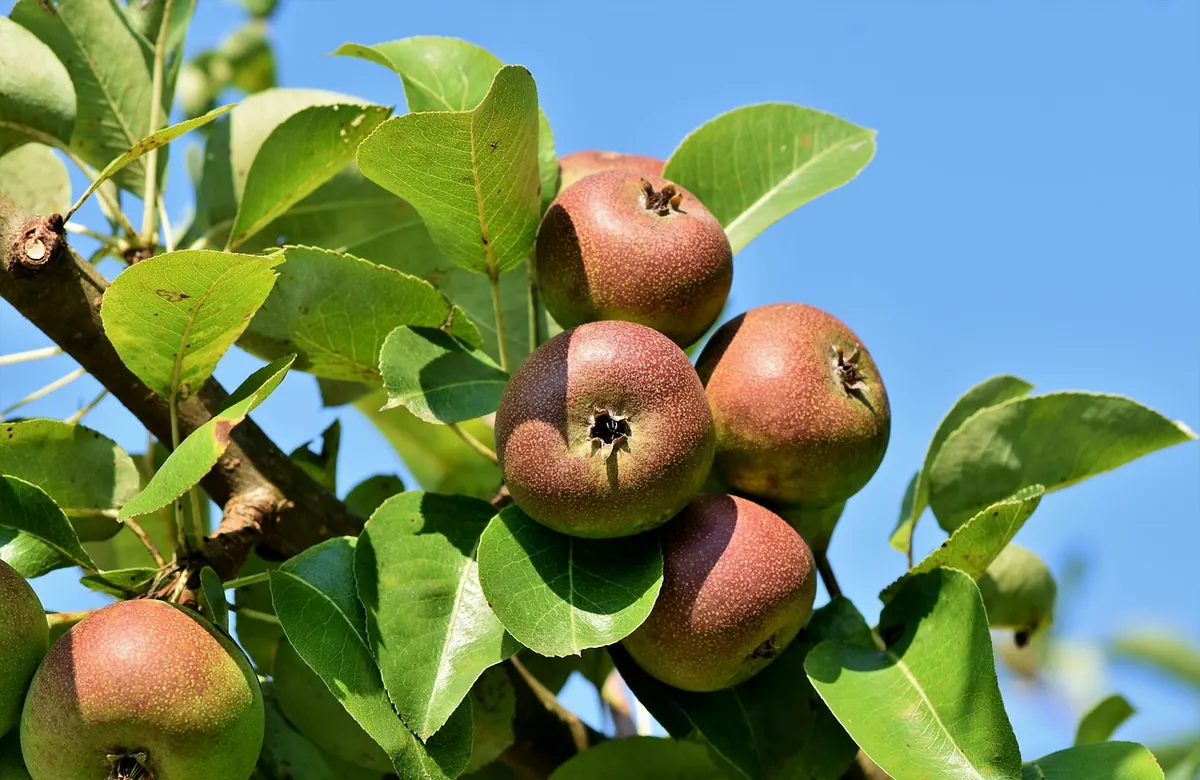
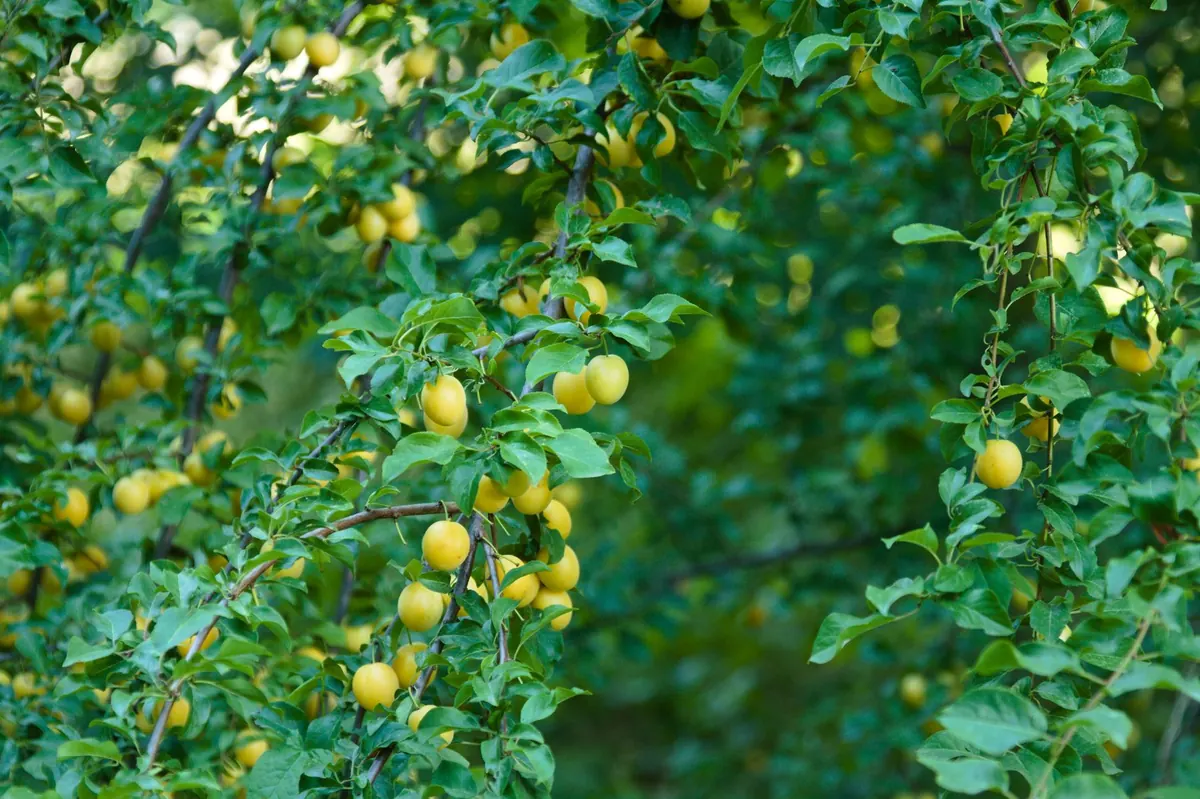
Apples and pears are the forgiving choice, and the ones most likely to crop generously in a British garden without fuss. Plums, gages and damsons do well in many areas. Dessert cherries are the difficult one: they want warmth, shelter and netting if you intend to eat any yourself rather than feed the blackbirds.
Think about volume, too. A mature apple tree produces an absurd amount of fruit in a good year, more than a small household can eat fresh. If you want to store, juice or cook, say so now, because the variety follows from that. Cookers such as 'Bramley's Seedling' keep for months; many dessert apples are best eaten within a few weeks of picking.
Disease resistance is worth asking about. In wetter western regions, apple scab and canker are a genuine nuisance, and choosing resistant varieties saves a lot of spraying and sulking. Staff at a good local nursery will know which varieties cope well where you live.
The rootstock is the root system your chosen variety is grafted onto, and it controls how big the tree eventually grows. This single detail causes more first-tree disappointments than anything else. For apples, the common UK options run from very dwarfing through to vigorous:
Pears are usually grafted onto quince rootstocks, with 'Quince C' the smaller of the two commonly sold. For plums, 'Pixy' keeps things compact while 'St Julien A' grows considerably larger. The label should name both the variety and the rootstock. If it names only the variety, ask. Buying blind on this point is the surest way to end up with a tree that outgrows its welcome.
Most apples and pears, and many plums, need a partner of a different variety that flowers at the same time. Varieties are sorted into pollination groups, broadly early, mid and late season, and you need two from the same group or from adjacent ones. Some varieties are self-fertile and crop perfectly well alone, including many plums and a handful of apples.
Two traps catch people out. First, triploid apples such as 'Bramley's Seedling' and 'Jonagold' cannot pollinate other apples, so they need two compatible partners rather than one. Second, a neighbour's tree a few gardens away may do the job, but it is a gamble. A crab apple in a corner will pollinate most apples reliably. A family tree, with two or three varieties grafted onto one trunk, sorts the problem out by itself, though the varieties grow at different rates and need a little attention each winter.
Fruit trees dislike standing water more than almost anything else. Before planting, dig a hole, fill it with water, and look again the next morning. If it is still full, pick another spot or plant on a slight mound. Most fruit is happy in a reasonably fertile, well-drained soil somewhere around neutral, though plums and cherries lean slightly alkaline. Blueberries are a separate case entirely and need ericaceous compost.
Frost is the other great variable. A late frost in May can strip a plum or cherry of its crop in a single night, so avoid frost pockets, the low points at the bottom of a slope where cold air settles. Choose later-flowering varieties on exposed sites. Wind breaks branches and blows blossom off, so shelter from a hedge or wall is worth a great deal, and a warm south or west-facing wall makes peaches, apricots and figs genuinely possible in much of the country.
Bare-root trees, lifted and sold between late autumn and early spring, establish better than pot-grown ones and cost less. Plant on a mild day, keep the graft union clear of the soil, and stake for the first few years.
Take a few minutes at the nursery rather than trusting the picture on the label.
Plant as soon as you reasonably can, water steadily through the first two summers, mulch around the trunk but not against it, and resist the urge to prune hard in the first year. Fruit trees settle slowly, and a first proper crop three or four years away is normal. Thin heavy fruit sets in midsummer so branches are not strained, and keep grass and weeds clear of the trunk while the tree is young. If you are unsure about your soil, a simple test kit costs little and tells you plenty. Get these fundamentals right and the tree will do the rest of the work for you.
Photo: Henryk63 / Pexels
Dwarf rootstocks, the right pot and steady watering turn a small patio into a productive orchard. Here is how to...
Reliable apple varieties for UK orchards that resist scab, mildew and canker, so you can spray less and still pick...
October 10, 2026 - Gardening Tips
October 07, 2026 - Varieties
Copyright © 2026 Orchard Zone. All Right Reserved.