Growing Fruit Trees in Pots: A UK Patio Guide
October 10, 2026 - Gardening Tips

October 10, 2026 - Gardening Tips
October 07, 2026 - Varieties
Plant an apple and you will probably get fruit. Plant a pear and you may wait longer, argue with it about shape, and then eat something better than anything a supermarket sells. That, roughly, is the trade-off. Both crops suit the UK climate, both can be grown in a modest garden or a strip of rough grass, and both will outlive whoever plants them. What separates them is detail: how they pollinate, how they grow, when you pick them and how long the fruit keeps. With room for only a handful of trees, those details decide which one earns its space.
This is where most small orchards go wrong, and the mistake is always the same: one lone tree, no partner, plenty of blossom and no fruit.
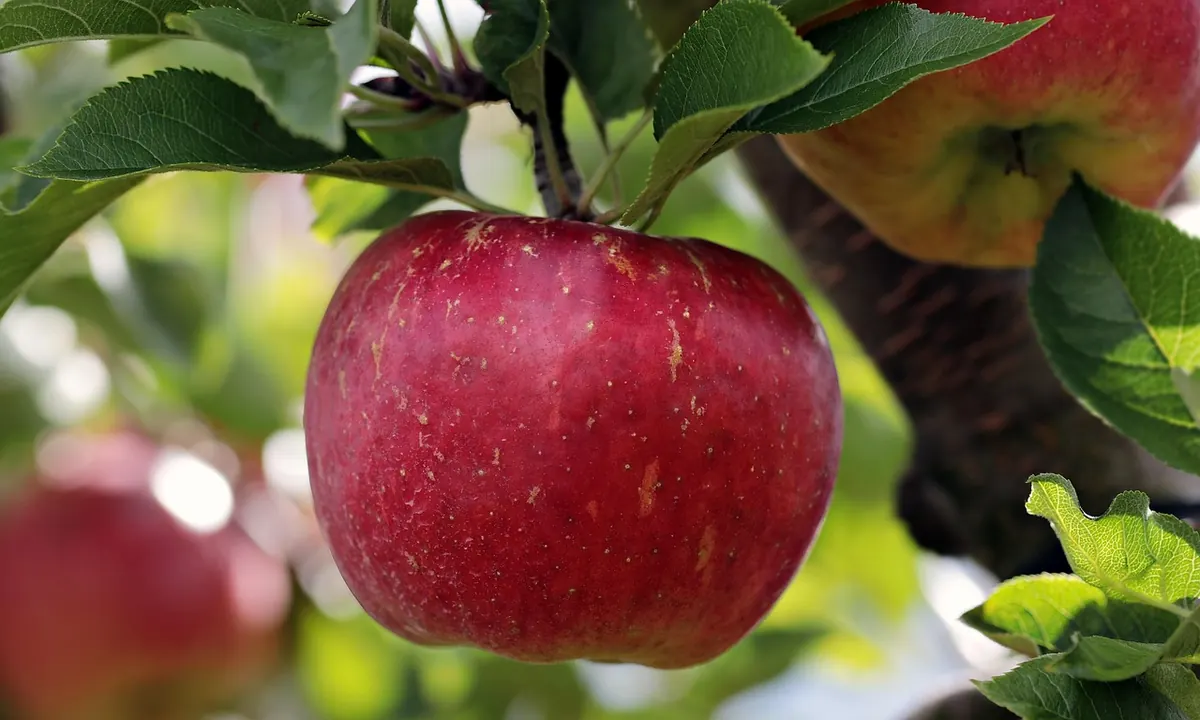
Most apples need a different variety flowering at the same time as theirs. Nursery catalogues grade varieties into pollination groups, and the rule is simple enough: varieties in the same group, or in groups either side, will overlap. Triploids such as Bramley's Seedling complicate things. They produce little usable pollen themselves, so they cannot pollinate a partner, and they need two other varieties nearby to crop well. Plant a Bramley and you are really planting three trees, not two. A crab apple such as John Downie in a corner covers a lot of ground as a pollinator and stretches the flowering window.
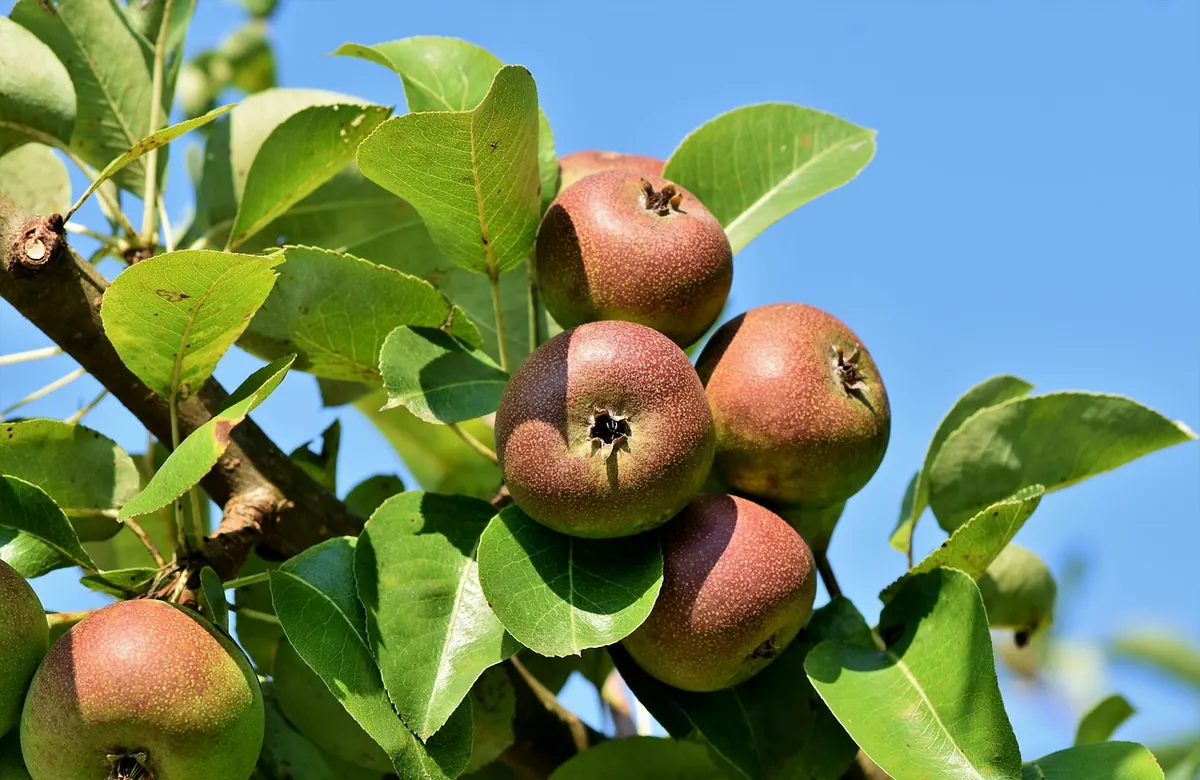
Pears work the same way, with two important differences. They flower earlier than apples, often by two or three weeks, and the flowering period is shorter. In a frost pocket, that is a genuine risk: the blossom opens, a cold night arrives, and the crop is gone before the apples have even started. Most pears also need a partner, though Conference and Concorde set a reasonable amount of fruit on their own, which is part of why Conference is so common in British gardens.
Apples are the easier of the two to read. Most garden varieties carry fruit on short, knobbly spurs on older wood, so winter pruning is largely a matter of thinning congested growth, taking out crossing branches and keeping the centre open. Aim for a goblet shape and you will not go far wrong. The exception is tip-bearers such as Worcester Pearmain or Irish Peach, which fruit at the ends of last year's shoots. Shorten those tips and you have cut off next year's crop.
Pears are more opinionated. Left alone, they produce stiff, upright growth, often in a narrow Y shape, and it can take years to persuade them into a decent framework. Young shoots are best tied down towards horizontal in late summer, which slows them and encourages fruiting spurs. Prune pears in late July or August where you can; winter cuts in mild, damp areas heal slowly and give canker an opening. If you only have time to manage one crop properly, apples will forgive you more often.
Apples spread themselves generously across the season. Early varieties crop from August, mid-season sorts in September, and the keepers come in from late September into October. Pears are tighter: most ripen in September and early October, and once picked they move fast.
Pears need a different approach at harvest. Pick them when they part from the tree with a gentle upward lift and the stalk stays attached, while they are still hard. Ripen them indoors at room temperature, checking the neck of the fruit near the stalk, which softens first. A pear that feels perfect on the tree is usually already past its best.
For storage, apples have the clear advantage. Late varieties such as Egremont Russet, Ashmead's Kernel and Bramley keep for weeks or months in a cool, dark, frost-free shed or garage. Early apples do not keep at all; eat them within a fortnight. Pears store for a shorter time, and Comice-style varieties are best eaten within days of ripening. A few pointers:
Apples carry more baggage. Scab marks the leaves and fruit in wet summers, canker attacks pruning wounds and old wood, and codling moth larvae tunnel through the fruit from June onwards. Woolly aphid and rosy apple aphid can distort shoots on young trees. Choosing scab-resistant varieties helps far more than spraying later on.
Pears are generally cleaner fruit, with less codling moth damage, but they have their own troubles. Pear rust shows as bright orange patches on the leaves and needs a juniper nearby to complete its life cycle, so it comes and goes with what is growing in the neighbourhood. Pear midge turns young fruitlets black and hollow, and pear leaf blister mite mottles the foliage. In warmer eastern and southern areas, fireblight is the serious one, and it is a strong argument for summer pruning and for avoiding very susceptible varieties.
You control the size of both trees through the rootstock, but not equally. Apples offer a wide range, from the very dwarfing M27 and M9 through M26 to the more vigorous MM106. Pears are usually grafted onto quince rootstocks, with Quince C keeping the tree compact and Quince A giving moderate growth. Pears on quince need decent soil, staking for the first years and a little patience; they dislike sitting wet in winter, whereas apples cope with a broader range of ground.
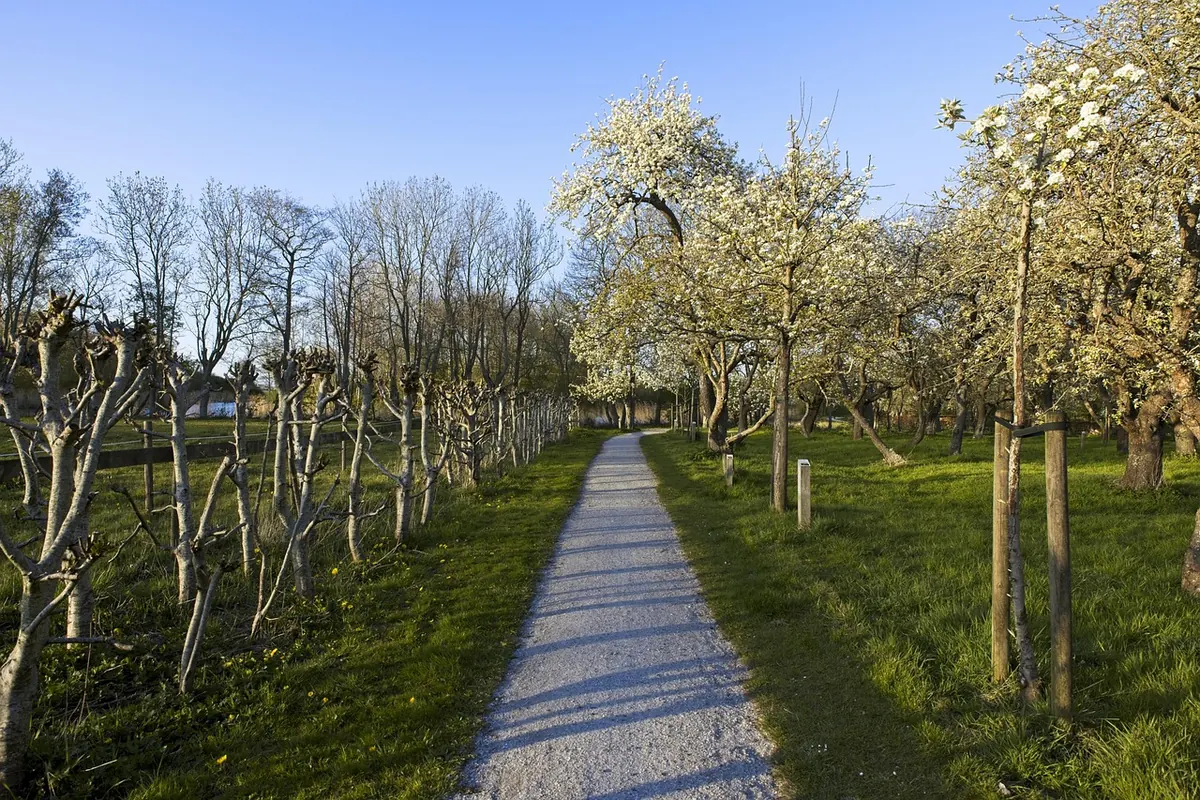
If your plot is small, the answer is often both, in restricted forms. A pair of cordons along a south-facing fence, one apple and one pear, takes up less room than a single bush and gives you variety and cross-pollination in one go.
Ask yourself a few questions before ordering:
For most small UK orchards, apples are the safer bet: quicker to crop, more forgiving of pruning, easier to store and available in varieties that suit almost any taste. Plant two varieties that flower together, or one plus a crab apple, and you will have fruit within a few years.
Add a pear if your soil drains reasonably and the site is not a frost pocket. Give it a sunny wall or a sheltered spot, put it on Quince C if space is tight, and be prepared to spend a little more time shaping it in the first three years. Buy bare-root trees between November and March from a British nursery, keep them watered through their first two summers, and clear the grass from around the trunk. Whatever you choose, plant for the long term and let the trees settle in.
Photo: AlkeMade / Pixabay
Dwarf rootstocks, the right pot and steady watering turn a small patio into a productive orchard. Here is how to...
Reliable apple varieties for UK orchards that resist scab, mildew and canker, so you can spray less and still pick...
October 10, 2026 - Gardening Tips
October 07, 2026 - Varieties
Copyright © 2026 Orchard Zone. All Right Reserved.